
Situational Awareness Under Fire: How Advanced HMI Design Reduces Cognitive Load for Tank Crews
In the controlled environment of a training range, a tank crew can methodically cycle through displays, consult checklists, and verify system status before acting. In actual combat, with the vehicle moving at speed across broken terrain, under direct fire, with communications traffic competing for attention, that luxury disappears. Every fraction of a second spent interpreting an interface is a fraction of a second not spent making the decision that determines survival.
The quality of crew station HMI design is therefore not an ergonomic nicety. It is a force multiplier and, in the most direct sense, a life-safety factor. This article examines how advanced HMI design principles reduce cognitive load for three-crew tank teams and what that means for platform procurement and upgrade decisions.
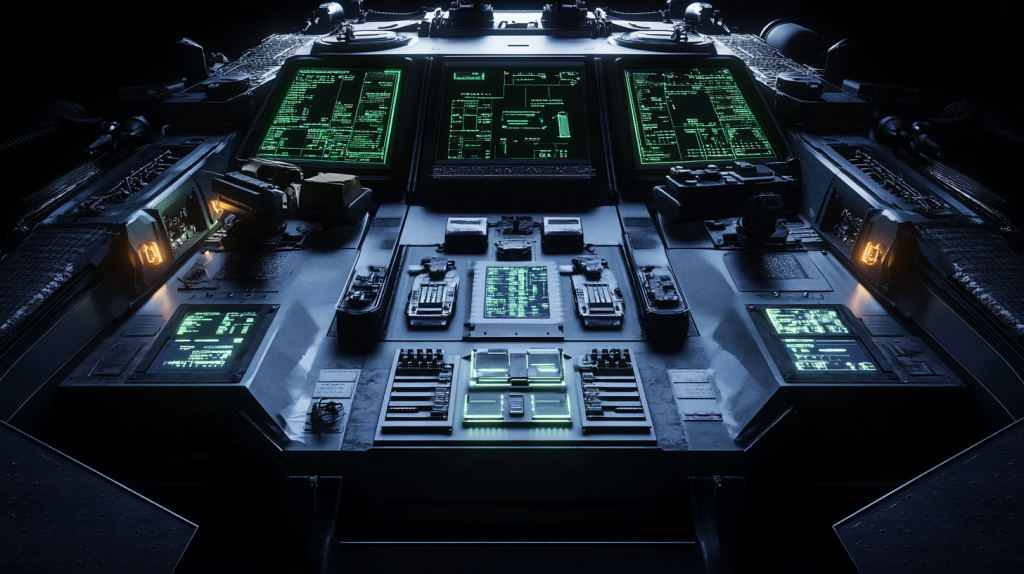
The Three-Crew Problem
Modern main battle tanks typically operate with three crew members: commander, gunner, and driver. Each has a distinct operational role, a distinct information requirement, and a distinct physical position within the vehicle. Tank crew situational awareness HMI design must address all three simultaneously, providing each crew member with the information relevant to their function without flooding their display with data relevant only to the others. The commander needs an overview: vehicle position, threat bearing, communications status, and the status of accompanying units. The gunner needs fire control data, target acquisition feeds, and ammunition management. The driver needs navigation guidance, terrain assessment, and vehicle health status. An HMI architecture that forces any crew member to navigate through information relevant to a different role is introducing unnecessary cognitive load at exactly the moment when that load is most dangerous.
Adaptive Interfaces and Mission-Phase Awareness
The most advanced approach to managing crew cognitive load is the adaptive interface: a display architecture that reconfigures its layout and information hierarchy based on the current mission phase. During a road march, navigation data dominates. During target engagement, fire control data takes precedence. During a maintenance halt, vehicle diagnostics move to the foreground. This adaptive display armored vehicle approach reduces the mental effort required to find relevant information, because the interface anticipates what the crew needs rather than presenting a static view that must be manually navigated. Software-reconfigurable display systems that can be updated via software load to accommodate new weapons, sensors, or mission systems, without physical hardware changes, make this architecture practical across a platform’s operational life.
Physical Controls: The Case for Tactile Feedback
Combat vehicle HMI ergonomics research consistently confirms that mission-critical commands should not rely solely on touchscreen input in high-vibration, high-stress environments. A commander who must look at a screen to confirm that a command was registered is a commander who is not watching the threat picture. Physical controls (push-button switches with tactile and audible feedback, joystick grips with finger-accessible hat switches, illuminated rotary knobs that confirm their own state) allow the crew to command the vehicle by feel rather than sight.
This does not mean rejecting touchscreen technology. It means understanding where each input modality excels and designing the crew station to use both appropriately. High-bandwidth information display and configuration tasks are well-suited to touchscreen interaction. Safety-critical and time-critical commands benefit from physical controls with unambiguous feedback.
Alert Management and Alarm Fatigue
A poorly designed alert architecture is as dangerous as a poorly designed display layout. Vehicle health monitoring, threat detection, and battle management systems can generate dozens of alerts per mission. If the crew station presents all of these with equal visual and audible urgency, crews learn to ignore them. Alarm fatigue sets in, and the alert that matters is lost in the noise.
Effective armored vehicle cockpit design implements alert prioritization: safety-critical alerts that require immediate crew action are visually and acoustically distinct from advisory messages that can be deferred. Alert hierarchies must be defined in close collaboration with the crews who will use them, and validated in realistic simulation before fielding.
Learning from Aviation Human Factors
Military aviation has invested heavily in crew station human factors research over several decades, driven by accident investigation findings that consistently identified interface design as a contributing factor in mishaps. The lessons from that investment, about attention management, display clutter, automation surprise, and alarm philosophy, apply with equal force to armored vehicle crew stations. Suppliers with deep experience in military aviation HMI bring this accumulated human factors knowledge to ground vehicle programs. The physics of attention and decision-making are the same whether the operator is in a cockpit or a turret.
AEROMAOZ: HMI Designed for the Operational Reality
AEROMAOZ designs and manufactures rugged HMI solutions for armored vehicles with crew operational effectiveness as the design driver. From illuminated multi-function displays to tactile push-button panels, control grips, and NVIS-compliant backlit knobs, every AEROMAOZ product is built to perform where it matters most: under fire, at speed, with no margin for interface failure. Explore the full AEROMAOZ product range at aeromaoz.com.