
The Digitized Crew Station: Why MBTs and IFVs Are Moving to Rugged Multi-Function Displays
Modern main battle tanks and infantry fighting vehicles are undergoing a quiet revolution. Decades of analog gauges, fixed-function switches, and single-purpose readouts are giving way to reconfigurable, multi-function display panels that give crews faster situational awareness and dramatically reduced cognitive load. For defense integrators, procurement officers, and platform upgrade managers, understanding this shift is essential to making the right HMI decisions today.
The Analog Legacy and Its Limits
Legacy crew stations were designed around specific sensors and weapon systems. Adding a new capability meant adding a new physical control — a knob here, an indicator there — until dashboards became dense and unintuitive. In high-stress combat conditions, that complexity costs precious seconds. Studies in military human factors consistently show that cluttered interfaces increase operator error rates, with direct consequences for mission outcomes.
The Case for Multi-Function Displays
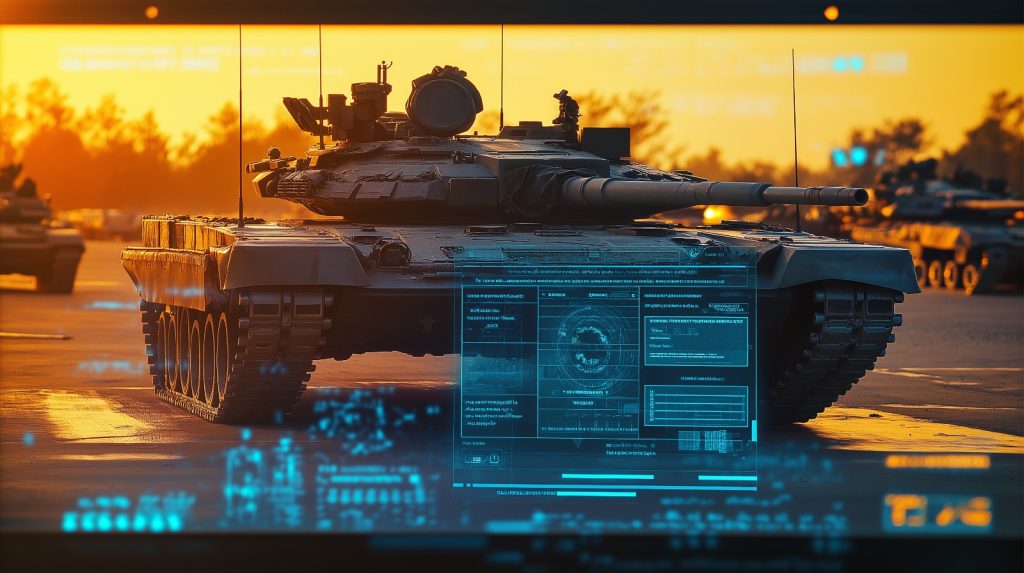
The pivot to rugged multi-function displays for armored vehicles offers a fundamental rethink of crew ergonomics. A single reconfigurable screen can consolidate battle management data, fire control status, navigation, vehicle diagnostics, and communications into one coherent interface. The operator selects the view relevant to the current mission phase, reducing visual scanning and decision latency.
This approach mirrors the transformation already completed in military aviation, where glass cockpit technology replaced panel after panel of dedicated instruments. The ground vehicle domain is following the same path, driven by the same pressures: more data, more sensors, more decisions per minute.
Touchscreen Technology and the Glove Problem
For years, rugged touchscreen displays for military vehicles faced a practical obstacle: crew members operate in gloves, and early capacitive screens could not register touch through standard military hand protection. The solution came through advances in projected capacitive (PCAP) technology, which can now be tuned to detect gloved input reliably — delivering the intuitive swipe-and-tap experience familiar from consumer devices, but qualified for the harshest environments on earth.
Resistive touch technology remains an option where glove sensitivity is paramount, and the choice between PCAP and resistive depends on specific platform requirements. What matters is that both technologies now meet the standards demanded by modern armored vehicle programs.
Environmental Demands: Beyond the Lab
Armored vehicle crew stations impose environmental stresses that civilian display manufacturers rarely encounter. MIL-STD-810 compliance is the baseline requirement, covering temperature extremes from -40 degrees Celsius to +70 degrees Celsius, shock loads from rough terrain and blast events, continuous vibration profiles, humidity ingress, and altitude variation. Displays must survive not just one of these conditions but all of them simultaneously over a service life measured in decades.
Size, Weight, and Power (SWaP) constraints add another layer of complexity. A display that works in a laboratory integration rack may be physically incompatible with the tight geometry of an existing turret or hull. Suppliers with a track record of form-fit-function solutions are far more valuable than those offering catalog products.
The Retrofit Opportunity
New platform programs represent only a fraction of the market. The larger opportunity – and the more urgent one – lies in mid-life upgrades to existing fleets. Leopard 2 variants, M1 Abrams upgrades, Merkava modernization programs, and comparable international platforms are all active upgrade candidates. In each case, the goal is to insert modern display and control capability without structural modification to the vehicle.
This requires suppliers who can deliver IFV crew station display upgrade solutions that match the physical envelope of legacy panels, interface with existing electronic architectures, and meet current certification requirements — all on program timelines that leave little room for qualification surprises.
AEROMAOZ: Qualified from Day One
AEROMAOZ designs and manufactures rugged HMI solutions for armored vehicles, drawing on decades of qualification experience in military aviation and ground platforms. Products are developed and certified to MIL-STD-810, MIL-STD-3009, AS9100, and AS7788 QPL standards. With a customer base that includes Elbit Systems, BAE Systems, Honeywell, and Bell Textron, AEROMAOZ brings proven supplier credentials to every armored vehicle program it supports.
As platform digitization accelerates, the quality of crew station interfaces will increasingly determine operational effectiveness. The transition to rugged multi-function displays is not a future trend — it is happening now, across every major armored vehicle program worldwide.
Contact AEROMAOZ at aeromaoz.com to discuss display and HMI solutions for your armored vehicle program.