
Inside the Ground Control Station: Designing HMI for 20-Hour UAV Missions
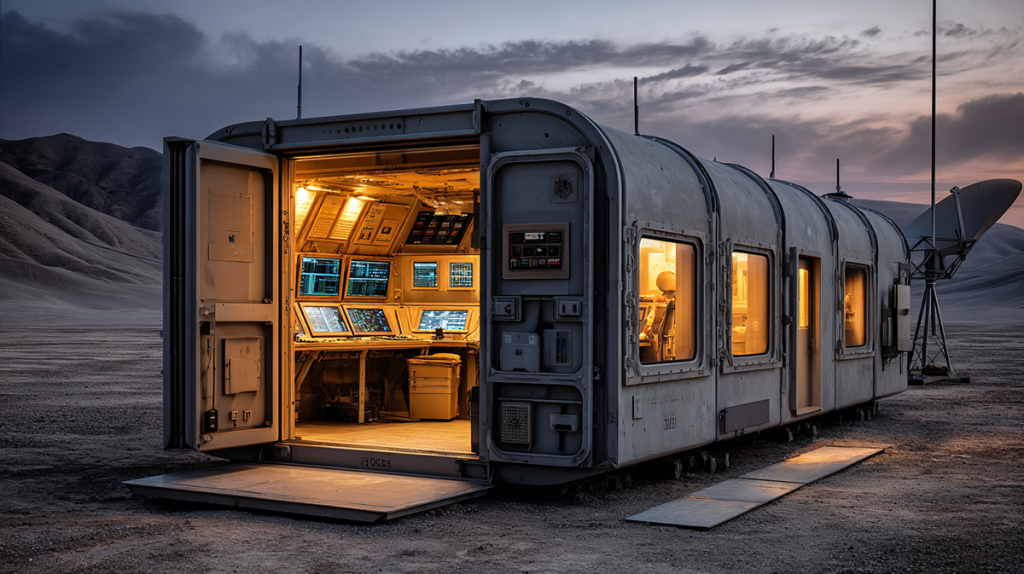
A medium-altitude, long-endurance UAV can stay airborne for more than a day. The people flying it cannot. While the aircraft loiters for 20 hours or longer, its crew works in shifts inside a UAV ground control station, handing the mission from one team to the next while the aircraft never lands. That reality makes ground control station HMI one of the most demanding design challenges in aerospace: the interface must support sharp decisions at hour eighteen just as reliably as it did at hour one.
The Operator Is Not in the Aircraft, but the Stakes Are the Same
Remote crews manage sensors, weapons, communications and airspace deconfliction from a console that may sit in a shelter, a vehicle, a ship or a building thousands of kilometers from the aircraft. They lack the physical cues a cockpit provides, and their workload follows a difficult pattern: long stretches of low activity, interrupted by sudden, intense demands when a target appears or a datalink degrades. Human factors research on remote operations has long identified this pattern as a major contributor to fatigue and error. The console must keep operators engaged during quiet periods and support them instantly when the tempo spikes.
Displays Built for Long Hours
Display design is the first line of defense against fatigue. Operators of a UAV operator console may watch sensor video and moving maps for an entire shift, so luminance, contrast and color balance matter as much for comfort as for readability. Rugged displays for ground control stations should offer wide, smooth dimming ranges, consistent color across viewing angles, and anti-reflective treatment for consoles that share space with overhead lighting or open hatches. In expeditionary shelters and shipboard installations, NVIS-compatible lighting allows crews to work at night without compromising light discipline or dark adaptation.
Layout matters equally. A well-designed station separates the pilot’s flight information from the sensor operator’s imagery and mission data, while still giving both crew members a shared picture of the aircraft’s state. Consistent symbology across the aircraft, the station and its training devices reduces mental translation at exactly the moments when operators are most tired.
Controls That Work Without Looking
Touchscreens bring flexibility, but long missions reward physical controls that operators can find by feel. Dedicated control grips with hat switches, slew controllers and programmable buttons let a sensor operator track a target while keeping eyes on the video. Illuminated panels with clear legends, distinct switch shapes and guarded critical functions reduce the risk of an inadvertent input from a tired hand. Tactile detents and positive switch feedback confirm every command without a glance away from the screen.
These principles echo those of user-centric HMI in manned cockpits, but they carry extra weight in a ground station, where the operator’s only connection to the aircraft is what the console presents and what it accepts.
Designing for the Handover
Shift change is one of the most vulnerable moments in a long-endurance mission. The incoming crew must absorb the aircraft’s status, the tactical picture, pending tasks and any anomalies within minutes. Interfaces that support structured handovers shorten this transition and reduce the chance that critical information is lost between teams. Useful features include clear mode annunciation, alerts that persist through a crew change, and personal display layouts that each operator can recall instantly.
From Shelter to Ship: Ruggedization Still Matters
It is tempting to treat a ground control station as an office environment. In practice, many stations are installed in trucks, tactical shelters, ships and forward operating bases. They face temperature extremes, shock and vibration during transport, dust, humidity, and electromagnetic interference from nearby transmitters. Consoles qualified to MIL-STD-810 environmental and MIL-STD-461 electromagnetic standards deliver the same dependability operators expect from airborne equipment. The same rigor applies to commercial operators running beyond-visual-line-of-sight missions from remote operations centers, where continuous uptime is both a regulatory and a business requirement.
Ready for What Comes Next
Ground control stations are evolving quickly. Single operators are beginning to supervise several aircraft at once, autonomy is shifting the crew’s role from flying to managing, and processing is moving closer to the operator to cut latency, a trend explored in our article on edge computing at the tactical edge. Each of these trends raises the importance of a clear, reliable and physically intuitive interface. The more the system does on its own, the more critical it becomes that the human can understand it and override it instantly. Training devices must keep pace too, which is why many programs now apply the same standards to flight simulator HMI as to operational consoles.
AEROMAOZ: Rugged HMI from Cockpit to Console
AEROMAOZ has designed and manufactured rugged HMI for UAV applications, commercial and military aviation, armored vehicles, naval platforms and flight simulators for more than four decades. Our displays, control grips, illuminated panels and control boxes are developed to MIL-STD-810, MIL-STD-461, MIL-STD-3009 and AS9100 standards, giving UAV system integrators flight-grade reliability on the ground. To discuss HMI for your next ground control station program, contact our team.