
Flight Simulator HMI for Advanced Avionics and Control Panels
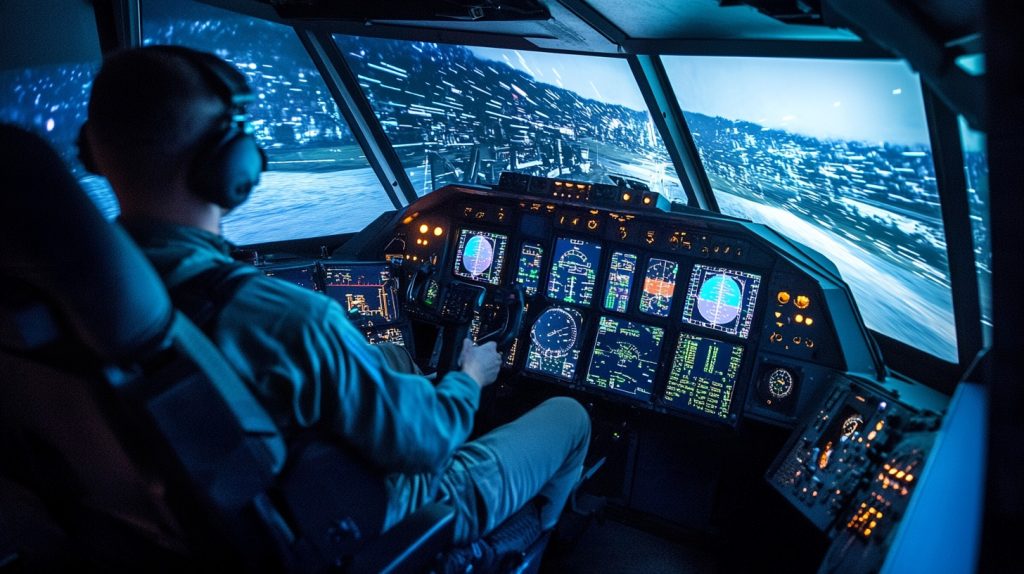
Flight simulation has become one of the fastest growing applications for advanced human machine interface engineering, and for good reason. As training budgets tighten and live flight hours become more expensive and harder to schedule, air forces, airlines, and helicopter operators are relying more heavily on simulators to build and maintain proficiency. That shift has raised the bar for Flight Simulator HMI design, because a simulator is only as valuable as its ability to convince a pilot’s hands, eyes, and instincts that they are flying the real aircraft.
Why Realism Depends on the Interface, Not Just the Visuals
It is easy to assume that simulator fidelity comes down to the visual system and the motion platform, but experienced training organizations know that the flight simulator cockpit HMI is just as critical. A pilot’s muscle memory is built around the exact feel, spacing, and resistance of the switches, knobs, and displays in the actual aircraft. If the simulator’s control panel does not replicate that experience precisely, negative training can occur, where a pilot learns habits in the simulator that do not transfer correctly, or actively interfere with, performance in the real cockpit.
This is why the most credible flight simulator HMI manufacturer organizations approach simulator hardware with the same rigor applied to flight hardware itself, rather than treating it as a lower cost, lower fidelity substitute. In many programs, the simulator control panel is built from the same drawings, tooling, and component specifications as the aircraft it represents, differing only where regulatory or cost considerations make an exact replica impractical.
Replicating Cockpit Controls With Precision
Flight simulator cockpit controls need to match the exact travel, detent feel, and force feedback of the source aircraft’s control sticks, throttles, and switches. A control stick with slightly different resistance, or a switch with a different detent feel, can be immediately noticeable to an experienced pilot and can undermine confidence in the entire training device. This level of fidelity requires close collaboration between the simulator integrator and a manufacturer capable of either supplying the same grips and switches used on the actual platform or precisely replicating their mechanical behavior.
Beyond controls, illuminated panels, push button switches, and knobs used in a simulator cockpit should carry the same lighting behavior as the source aircraft, including compatibility with Night Vision Imaging System training scenarios where applicable. Training for night operations is only useful if the simulator’s lighting behaves exactly as the aircraft’s lighting would under the same night vision equipment.
Displays and Avionics Fidelity
Modern flight simulators increasingly rely on full color multi-function displays to replicate glass cockpit avionics suites, and these displays have to match the brightness, color rendering, and touch response of the aircraft’s actual display system. An aircraft simulator control panel built around mismatched display technology can create a subtle but persistent disconnect for trainees, particularly during high workload scenarios such as instrument approaches or emergency procedures, where display readability directly affects decision making.
Durability for High Utilization Training Environments
Simulators are frequently used far more intensively than the aircraft they represent, sometimes running multiple training sessions per day, seven days a week, for years without a scheduled depot overhaul. Every switch, knob, and display in the simulator cockpit has to be engineered for that duty cycle, since a failed control mid session disrupts an expensive training slot and can undermine confidence in the training device itself. This makes ruggedized, field proven hardware just as relevant to simulator programs as it is to the operational aircraft.
Supporting Multiple Simulator Fidelity Levels
Not every training device requires a full replica cockpit. Procedural trainers, part task trainers, and full mission simulators each demand a different level of hardware fidelity, and a capable manufacturer will support the entire range rather than forcing every program into a single approach. A procedural trainer may use simplified representative controls to teach checklist flows, while a full mission simulator qualified to the highest training device levels needs hardware that is functionally and dimensionally identical to the aircraft. Working with one manufacturer across this full range keeps design data, lighting standards, and mechanical interfaces consistent as a training organization expands its simulator fleet over time.
A Long Term Engineering Partnership
Because flight simulators are typically upgraded and modernized over multiple technology refresh cycles while the underlying aircraft type continues flying, program teams benefit from working with a manufacturer that supports both the original aircraft hardware and its simulator equivalent under a single, coordinated engineering relationship. This reduces configuration drift between the aircraft and its training devices and simplifies the process of updating simulators whenever the fielded aircraft receives a cockpit modification.
Aeromaoz has supplied ruggedized human machine interface hardware, including illuminated panels, control sticks, and multi-function display bezels, to military and commercial aviation programs for more than 45 years, and applies the same engineering standards to flight simulator applications as to fielded operational aircraft. Programs evaluating simulator upgrades or new-build training devices are welcome to review our full range of Human Machine Interface solutions on our Products page, or explore our dedicated Flight Simulators market segment for platform specific examples.
As training organizations continue to expand simulator utilization in place of costly flight hours, the fidelity of flight simulator HMI hardware will remain one of the most direct levers available for improving training outcomes and reducing the gap between simulated and live flight performance.