
Cockpit Display Systems: From Glass Panels to Mission-Ready Avionics
Cockpit display systems are among the most critical interfaces in modern aviation. Whether guiding a commercial airliner through low-visibility approaches or supporting a military crew in a high-threat environment, the display suite in the cockpit is the aircrew’s primary window into the state of the aircraft and mission. Understanding what these systems are, how they work, and what standards govern them is essential for engineers, procurement managers, and system integrators who specify and source avionics display systems for new platforms and upgrade programs.
What Is a Cockpit Display System?
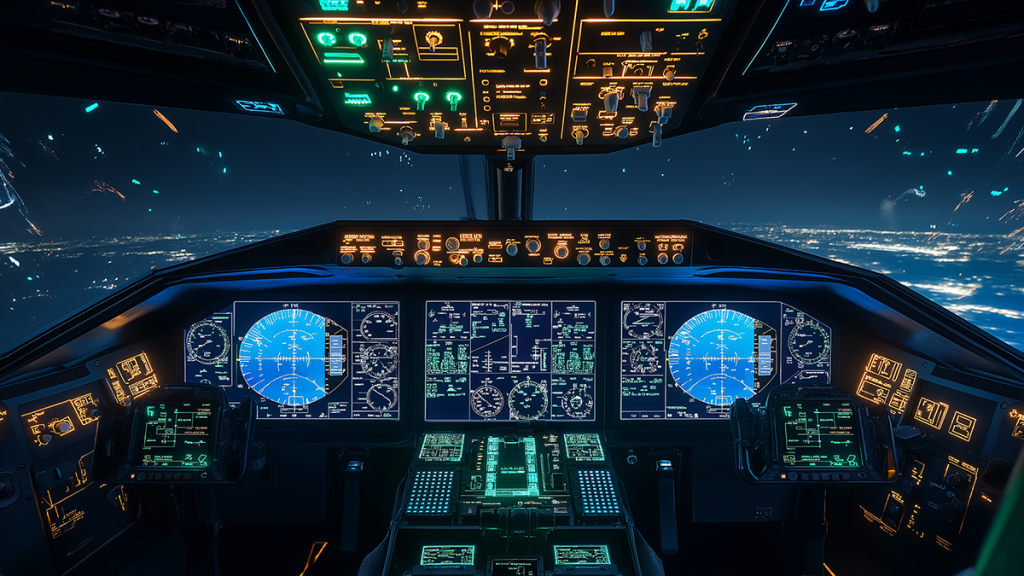
A cockpit display system is an integrated set of electronic screens and associated processing hardware that presents flight, navigation, engine, and mission data to the flight crew. Unlike legacy analog instrument panels – filled with individual gauges and dials – modern glass cockpit displays consolidate this information onto multi-function screens, dramatically reducing pilot workload and improving situational awareness. The shift from electromechanical instruments to digital cockpit displays represents one of the most transformative advances in aviation history, beginning in the 1980s and accelerating through the present day.
Core Components of a Modern Cockpit Display Suite
A complete aircraft cockpit display installation typically comprises several interdependent elements:
- Primary Flight Display (PFD): The primary flight display presents attitude, airspeed, altitude, vertical speed, and heading on a single screen, replacing six or more conventional instruments.
- Multi-Function Display (MFD): The multi function cockpit display shows navigation maps, terrain, weather radar, traffic, and system synoptics. Crews can reconfigure the MFD to prioritize the data most relevant to the current phase of flight or mission.
- Engine Indication and Crew Alerting System (EICAS / ECAM): Monitors propulsion and aircraft systems, presenting warnings and checklists to the crew.
- Head-Up Display (HUD): Projects flight-critical symbology onto a combiner glass at the pilot’s eye level, enabling eyes-out situational awareness during critical maneuvers.
- Display Management Computer (DMC): The processing backbone that collects sensor data from avionics buses (ARINC 429, MIL-STD-1553) and drives the display units.
Together, these elements form the cockpit display technology architecture that underlies every certified modern aircraft.
Types of Cockpit Display Systems
Display systems vary substantially depending on the platform type, mission profile, and certification basis:
- Commercial transport displays (e.g., Boeing 787 or Airbus A350) emphasize DO-178C software assurance and DO-254 hardware design, with large-format LCD panels and high-brightness options for all ambient conditions.
- Military fixed-wing displays add MIL-STD-810 environmental hardening, NVIS compatibility for night-vision goggle operations, and security partitioning for classified data.
- Rotary-wing displays must withstand extreme vibration profiles and often feature smaller form factors to fit within constrained cockpit envelopes.
- UAV ground control station displays replicate flight deck functionality in a ground-based console, with low-latency video integration and remote pilot interface requirements.
How Cockpit Display Systems Work
Data flows into the display system from sensors and avionics subsystems over standardized data buses. The DMC processes these inputs, applies display management logic, and renders graphical pages according to the active configuration. Outputs are then driven to the display units via digital video interfaces such as DVI or LVDS. Modern systems support reconfiguration: if one display fails, the crew can redistribute its pages across remaining screens, maintaining full situational awareness. This reconfigurability is a cornerstone of cockpit display technology today, directly contributing to dispatch reliability and crew safety.
Testing Standards and Certification Requirements
Cockpit display testing is one of the most rigorous disciplines in avionics qualification. Systems must demonstrate compliance with a layered set of standards before a regulator will approve installation:
- DO-160G (RTCA): Governs cockpit display environmental testing, covering temperature, altitude, humidity, vibration, shock, explosion-proofness, waterproofness, magnetic effect, power input, voltage spike, and lightning effects. Each test category maps to an equipment category appropriate to the installation zone.
- MIL-STD-461 and MIL-STD-464: Electromagnetic compatibility requirements for military platforms, ensuring displays neither radiate interference nor are susceptible to the electromagnetic environment.
- MIL-STD-810H: Defines cockpit display reliability testing under temperature extremes, altitude, humidity, vibration, shock, and other environmental stressors specific to military applications.
- RTCA DO-178C / DO-254: Software and hardware design assurance levels (DAL A through E), required by FAA and EASA for civil-certified displays. DAL A items have no acceptable failure rate.
- NVIS compatibility (MIL-STD-3009): Military displays that will be used with night-vision goggles must not emit wavelengths that degrade goggle performance, verified through photometric testing.
Achieving compliance with these cockpit display standards requires close collaboration between display manufacturers, platform integrators, and certification authorities from the earliest design phases.
AEROMAOZ is a world-recognized supplier of rugged HMI solutions for mission-critical aviation and defense environments. With more than 45 years of design and manufacturing experience, AEROMAOZ produces illuminated panels and bezels, control sticks and grips, push-button switches, NVIS-compatible lighting systems, and ruggedized display interfaces for commercial and military aviation, armored vehicles, UAVs, naval platforms, and flight simulators. Certified to AS9100 and qualified to QPL standards, the company supplies Tier-1 system integrators and platform manufacturers worldwide. Learn more at aeromaoz.com
Future Trends in Cockpit Display Technology
Several converging technologies are reshaping the next generation of avionics display systems:
- Large-format curved displays: Single-panel solutions that span the entire instrument panel width, reducing bezels and increasing usable screen real estate.
- Synthetic vision and enhanced vision: Integration of terrain databases, infrared sensors, and augmented reality overlays to provide pilots with a clear forward view regardless of meteorological conditions.
- OLED and microLED panels: Offer higher contrast ratios, wider color gamut, and reduced power consumption versus traditional LCD technology – critical for energy-constrained UAV platforms.
- Touchscreen and gesture interfaces: Increasingly adopted in commercial cockpits and advanced military trainer aircraft, though glove compatibility and vibration tolerance remain engineering challenges.
- AI-driven display management: Algorithms that adapt the display layout dynamically based on the current phase of flight, detected crew workload, and system health, reducing cognitive load at critical moments.
As platforms evolve and mission requirements become more demanding, the engineering disciplines surrounding cockpit display systems – from hardware ruggedization and environmental qualification to software assurance and human factors validation – will remain central to aviation safety and operational effectiveness. Procurement managers and design engineers specifying display solutions must balance innovation with the proven reliability standards that govern certified airborne systems.