WORTH READING /

Human-AI Teaming: Designing Interfaces for Human-Machine Collaboration

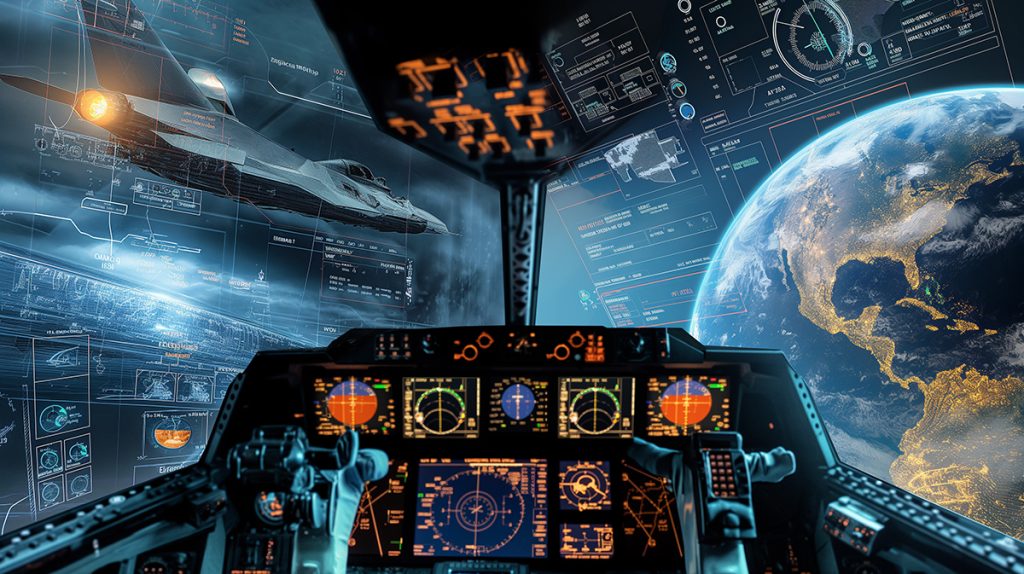
As artificial intelligence becomes increasingly integrated into military systems, the relationship between human operators and autonomous capabilities is evolving from simple tool usage to sophisticated partnership. Modern HMI design must facilitate effective human-AI teaming that leverages the strengths of both human cognition and machine processing while maintaining human authority over critical decisions.

The Evolution of Human-Machine Relationships
Traditional military systems position humans as controllers and machines as tools, with clear boundaries between human decision-making and machine execution. Emerging AI capabilities blur these boundaries, creating opportunities for more sophisticated collaboration where humans and machines work together as partners rather than in simple controller-tool relationships.
This evolution requires fundamental changes in interface design philosophy. Instead of displaying raw data for human interpretation, AI-enabled interfaces must present machine analysis and recommendations while providing tools for human oversight, modification, and ultimate decision authority.

Transparent AI Decision-Making
Effective human-AI teaming requires that human operators understand how AI systems reach their conclusions. HMI systems must provide clear visualization of AI reasoning processes, showing the data sources, analytical methods, and confidence levels associated with machine-generated recommendations.
Interactive explanatory interfaces allow operators to drill down into AI decision logic, examining the specific factors that influenced machine recommendations. This transparency enables operators to evaluate AI suggestions intelligently while identifying situations where human judgment should override machine analysis.

Confidence Visualization
AI systems excel at processing large data volumes but struggle with uncertainty quantification in complex, dynamic environments. HMI systems must clearly communicate AI confidence levels, enabling human operators to appropriately weight machine recommendations based on their reliability.
Visual confidence indicators use color coding, probability distributions, and uncertainty ranges to communicate machine confidence levels intuitively. These displays help operators understand when AI recommendations are highly reliable versus situations where human expertise should take precedence.

Human Override Capabilities
Maintaining human authority over critical decisions requires HMI systems that enable rapid and intuitive override of AI recommendations. Interface designs must balance efficiency with safety, providing quick override capabilities while preventing accidental modifications that could compromise operational effectiveness.
Multi-level override systems enable different types of human intervention based on situation criticality and available time. Emergency override capabilities provide immediate human control, while deliberate override processes enable thoughtful modification of AI-generated plans and recommendations.

Workload Management
AI capabilities should reduce human cognitive workload rather than add complexity to operational tasks. HMI systems must intelligently manage the presentation of AI-generated information, providing relevant insights without overwhelming operators with excessive data or recommendations.
Adaptive interfaces adjust the level of AI assistance based on operational tempo and operator workload. During high-stress situations, AI systems take greater initiative while presenting simplified summaries to human operators. During lower-tempo operations, more detailed AI analysis and alternative recommendations become available.

Learning and Adaptation
Effective human-AI teams improve over time through mutual learning and adaptation. HMI systems must capture human override decisions and feedback to improve AI performance while enabling human operators to understand and adapt to AI capabilities and limitations.
Machine learning algorithms analyze patterns in human override decisions to identify situations where AI recommendations consistently prove inadequate. This analysis informs improvements to AI algorithms while helping human operators understand the boundaries of machine capabilities.

Trust Calibration
Successful human-AI teaming requires appropriate trust levels—neither over-reliance on AI capabilities nor excessive skepticism that prevents effective collaboration. HMI systems must provide information that enables operators to calibrate their trust in AI systems based on performance history and current conditions.
Trust indicators show historical AI performance in similar situations, providing context for current recommendations. These displays help operators develop appropriate reliance levels while maintaining healthy skepticism about machine capabilities.

Distributed Authority
Complex military operations often involve multiple human operators working with AI systems across different functional areas. HMI systems must support coordination among human-AI teams while maintaining clear authority structures and decision accountability.
Collaborative interfaces show the distribution of human and AI responsibilities across operational functions, highlighting handoff points and coordination requirements. These displays ensure that all team members understand their roles and responsibilities in human-AI collaborative processes.

Training and Skill Development
Human-AI teaming effectiveness depends on human operators developing appropriate skills for AI collaboration. HMI systems should include training modes that help operators understand AI capabilities and limitations while developing effective collaboration techniques.
Simulation capabilities enable operators to practice human-AI teaming in realistic scenarios without operational risks. These training environments help operators develop intuition for effective AI collaboration while identifying areas where additional training or system modifications may be beneficial.

The Aeromaoz Human-AI Teaming Advantage

Aeromaoz‘s deep understanding of both human factors engineering and AI integration enables us to design HMI systems that facilitate effective human-AI collaboration without compromising operational effectiveness. Our specialized expertise in military operational requirements ensures that AI integration enhances rather than complicates mission execution.
Our agile development approach enables rapid incorporation of lessons learned from human-AI teaming research while maintaining the reliability and security standards essential for military applications. This combination of innovation and military focus provides significant advantages in delivering effective human-AI collaboration capabilities.
Our commitment to transparent AI implementation ensures that human operators maintain appropriate situational awareness and decision authority while leveraging AI capabilities to enhance operational effectiveness.
Human-AI teaming represents the future of military operations, where effective collaboration between human expertise and machine capabilities will provide decisive advantages. HMI systems that facilitate effective human-AI partnerships will be essential for success in increasingly complex operational environments.

WORTH READING /

Digital Twins in HMI Development: Virtual Testing for Real-World Reliability

The development of mission-critical human-machine interfaces demands rigorous testing under conditions that would be impractical, expensive, or dangerous to replicate in physical environments. Digital twin technology is revolutionizing HMI development by enabling comprehensive virtual testing that accelerates development timelines while improving reliability and reducing costs.

Beyond Traditional Prototyping

Traditional HMI development relies on physical prototypes that must undergo extensive environmental testing to validate performance under extreme conditions. This approach requires expensive environmental chambers, extended testing periods, and often results in late-stage design discoveries that require costly modifications.

Digital twin technology creates comprehensive virtual replicas of HMI systems that include not just the interface components, but also the complete operational environment in which they function. These virtual systems enable testing of complex scenarios that would be difficult or impossible to replicate in laboratory settings.


Comprehensive Environmental Simulation

Military HMI systems must operate reliably across extreme temperature ranges, humidity levels, vibration profiles, and electromagnetic environments. Digital twins can simulate these conditions with precision that matches or exceeds physical testing capabilities while enabling rapid iteration through multiple scenarios. Virtual environmental testing can simulate years of operational wear in compressed timeframes, identifying potential failure modes and design weaknesses before physical prototypes are constructed. This approach dramatically reduces development risks while accelerating time-to-deployment for critical military systems.


Multi-Physics Modeling

Advanced digital twins incorporate multiple physical phenomena simultaneously, enabling analysis of complex interactions that affect HMI performance. Thermal effects on display performance, vibration impacts on mechanical components, and electromagnetic interference effects on electronic systems can all be modeled concurrently. This multi-physics approach reveals system behaviors that single-domain analyses might miss, providing insights into optimization opportunities and potential failure modes that traditional testing approaches cannot identify.


Human Factors Integration

Digital twin technology extends beyond hardware modeling to include human operator behavior and performance characteristics. Virtual operators with realistic cognitive and physical limitations can interact with HMI designs, revealing usability issues and optimization opportunities before physical user testing begins. These human factors models can simulate operator performance under stress, fatigue, and varying expertise levels, ensuring that HMI designs remain effective across the full range of expected operational conditions.


Accelerated Reliability Testing

Digital twins enable accelerated reliability testing by simulating extended operational periods in compressed timeframes. Monte Carlo analysis techniques can evaluate thousands of potential failure scenarios, identifying design weaknesses and optimization opportunities that might not emerge in traditional testing approaches. Reliability predictions based on digital twin analysis provide quantitative metrics that support design decisions and procurement strategies. This data-driven approach to reliability assessment reduces program risks while optimizing lifecycle costs.


Real-World Data Integration

Digital twins become increasingly accurate as they incorporate data from fielded systems. Sensor data from operational HMI systems can be fed back into digital twin models, continuously improving their fidelity and predictive capabilities. This integration creates a feedback loop where operational experience improves virtual testing accuracy, while virtual testing insights inform operational optimization strategies. The result is continuous improvement in both virtual and physical system performance.


Rapid Design Iteration

Digital twin environments enable rapid evaluation of design alternatives without the time and expense associated with physical prototyping. Multiple design concepts can be evaluated simultaneously, with comprehensive performance comparisons available within days rather than months. This rapid iteration capability enables exploration of innovative design approaches that might be considered too risky for traditional development processes. The result is more optimized final designs that incorporate lessons learned from extensive virtual evaluation.


Mission-Specific Optimization

Digital twins can be configured to simulate specific mission profiles and operational requirements, enabling optimization of HMI designs for particular applications. Interface layouts, display characteristics, and control schemes can be tailored for optimal performance in specific operational contexts. This mission-specific optimization capability ensures that HMI systems deliver maximum effectiveness for their intended applications while maintaining the flexibility to support diverse operational requirements.


Cost-Effective Development

Digital twin technology dramatically reduces development costs by identifying design issues early in the development process when modifications are least expensive. Virtual testing eliminates the need for extensive physical prototype construction and testing, while providing more comprehensive evaluation capabilities. The cost savings from digital twin development can be reinvested in enhanced capabilities or additional testing scenarios, improving final system performance without increasing overall development costs.


The Aeromaoz Digital Twin Advantage

Aeromaoz‘s investment in advanced digital twin capabilities provides significant competitive advantages in HMI development speed, quality, and cost-effectiveness. Our specialized expertise in both virtual modeling techniques and military operational requirements enables us to create digital twins that accurately represent real-world conditions and constraints.

Our agile development processes leverage digital twin insights to optimize design decisions throughout the development cycle, ensuring that our HMI systems meet or exceed performance requirements while minimizing development risks and costs.

This combination of advanced virtual testing capabilities and military domain expertise enables us to deliver superior HMI solutions  with shorter development timelines than traditional approaches, providing significant advantages for time-critical military programs.

Digital twin technology represents the future of complex system development, where virtual testing capabilities enable more thorough evaluation than physical testing alone. Organizations that master digital twin approaches will maintain decisive advantages in system performance, reliability, and development efficiency.


WORTH READING /

Multi-Domain Operations (MDO) HMI: Interfaces for Land, Sea, Air, Space, and Cyber Integration

The modern battlespace extends across all domains simultaneously, requiring human-machine interfaces that can seamlessly integrate and display information from land, sea, air, space, and cyber operations. As military forces adopt Multi-Domain Operations (MDO) concepts, HMI systems must evolve to support commanders and operators who need unified situational awareness across this expanded operational environment.

The Multi-Domain Challenge
Traditional military operations organized around single domains—land forces, naval operations, or air campaigns—are giving way to integrated approaches that leverage capabilities across all domains simultaneously. This fundamental shift demands HMI systems that can process, correlate, and display information from diverse sources while enabling operators to maintain comprehensive situational awareness.
Consider a modern combined arms operation where ground forces require air support while naval assets provide fire support and cyber operations disable enemy communications. Commanders need interfaces that show ground unit positions, aircraft locations, naval gun ranges, satellite coverage areas, and cyber-attack progress in unified displays that reveal the interactions between all domains.

Unified Data Architecture
Effective MDO HMI systems require robust data architectures that can ingest information from diverse sources while maintaining real-time processing capabilities. Land-based sensors, maritime radar systems, aircraft telemetry, satellite imagery, and cyber operation status must all feed into common data models that enable cross-domain correlation and analysis. Advanced data fusion algorithms identify relationships between events across different domains, revealing patterns and opportunities that single-domain perspectives might miss. These systems can automatically correlate cyber-attacks with kinetic operations, identify optimal timing for multi-domain engagements, and highlight vulnerabilities that span multiple operational areas.

Cross-Domain Intelligence Integration
Intelligence gathering and analysis in MDO environments requires synthesis of information from all operational domains. HMI systems must present integrated intelligence pictures that show how events in one domain affect operations in others. Modern MDO interfaces can display cyber network topology alongside physical geography, showing how digital infrastructure relates to physical terrain and operational objectives. This integration enables operators to understand second and third-order effects of operations across domain boundaries.

Synchronized Operations Coordination
Multi-domain operations require precise timing and coordination across diverse military capabilities. HMI systems must enable operators to visualize complex operational timelines that span multiple domains while providing tools for real-time coordination adjustments. Interactive timeline displays show the scheduled progression of operations across all domains, highlighting critical synchronization points and potential conflicts. Operators can adjust timing and sequencing in real-time while immediately seeing the effects on other domain operations.

Space Domain Integration
The space domain provides critical enablers for multi-domain operations through satellite communications, navigation, and intelligence capabilities. MDO HMI systems must integrate space asset status and capabilities into terrestrial operational planning and execution. Satellite coverage displays show communication windows, intelligence collection opportunities, and navigation system availability in relation to ground, sea, and air operations. This integration ensures that space-dependent capabilities are properly coordinated with other domain activities.

Cyber Domain Visualization
Cyber operations increasingly affect physical domain activities through their impact on communications, navigation, and control systems. MDO HMI systems must visualize cyber domain activities and their effects on physical operations in intuitive ways. Network topology displays show the digital infrastructure supporting physical operations, highlighting vulnerabilities and attack vectors that could affect multi-domain campaigns. Real-time cyber operation status updates show the progression of digital attacks and their potential impacts on kinetic operations.

Scalable Information Display
MDO operations generate enormous volumes of information that must be presented to operators without overwhelming their cognitive capabilities. Advanced HMI systems use intelligent filtering and prioritization algorithms to present relevant information while maintaining access to detailed data when needed.
Hierarchical display structures enable operators to zoom from strategic overviews showing all domains to tactical details within specific areas of interest. Context-aware information management ensures that the most relevant information for current operations receives priority display treatment.

Collaborative Decision Making
Multi-domain operations require coordination among diverse military specialties and commands. HMI systems must support collaborative planning and execution processes that enable effective communication across domain boundaries.
Shared operational pictures enable distributed teams to maintain common situational awareness while specialized displays provide domain-specific details for expert operators. Real-time annotation and communication tools facilitate coordination without requiring separate communication systems.

The Aeromaoz MDO Advantage

Aeromaoz‘s broad experience across military domains positions us uniquely to develop HMI systems that effectively integrate multi-domain operations. Our understanding of diverse military requirements and operational procedures enables us to create interfaces that enhance rather than complicate cross-domain coordination.
Our specialized expertise in both advanced display technologies and military operational requirements allows us to deliver MDO solutions that maintain the performance and reliability standards essential for mission-critical operations. This domain knowledge provides significant advantages over competitors who lack specialized military experience.
Our agile development approach enables rapid adaptation to evolving MDO concepts and requirements, ensuring that our HMI systems remain at the forefront of multi-domain operational capabilities.
Multi-Domain Operations represent the future of military conflict, where success requires seamless integration of capabilities across all operational domains. HMI systems that enable effective MDO coordination will provide decisive advantages in increasingly complex operational environments.

WORTH READING /

Sustainable Defense Technology: Energy-Efficient HMI Design for Extended Missions

As military operations extend into remote regions for longer durations, energy efficiency has evolved from a convenience feature to a critical operational capability. Modern HMI systems must deliver maximum functionality while minimizing power consumption to support extended mission endurance and align with evolving Department of Defense sustainability initiatives.

The Power Challenge in Forward Operations
Extended military operations in remote locations face significant power generation and distribution challenges. Traditional generator-based power systems require substantial fuel logistics, create acoustic and thermal signatures that compromise operational security, and generate emissions that conflict with environmental stewardship goals.
Battery-powered systems offer tactical advantages through reduced signatures and enhanced mobility, but impose strict power budgets that demand careful optimization of every system component. HMI systems, which operate continuously throughout missions, represent significant opportunities for power savings through intelligent design approaches.

Display Technology Optimization
Advanced display technologies offer substantial power savings compared to traditional approaches. Modern OLED displays consume power only for illuminated pixels, providing significant efficiency advantages for applications that frequently display dark backgrounds or sparse information layouts.
E-ink and reflective display technologies eliminate backlight power requirements entirely for certain applications, enabling daylight-readable displays with power consumption measured in milliwatts rather than watts. Hybrid display approaches combine multiple technologies to optimize power consumption across varying operational conditions.
Intelligent brightness control algorithms automatically adjust display intensity based on ambient lighting conditions and user requirements, eliminating unnecessary power consumption while maintaining optimal readability. These systems can reduce display power consumption by 50% or more compared to static brightness approaches.

Processor Efficiency and Dynamic Scaling
Modern military HMI systems leverage advanced processor architectures that dynamically scale performance based on operational demands. During periods of low activity, processors automatically reduce clock speeds and voltage levels, dramatically decreasing power consumption while maintaining instant response capabilities.
Heterogeneous computing architectures combine general-purpose processors with specialized accelerators optimized for specific tasks. Graphics processing, signal analysis, and AI inference can be handled by dedicated hardware that delivers superior performance per watt compared to general-purpose alternatives.

Solar Integration Possibilities
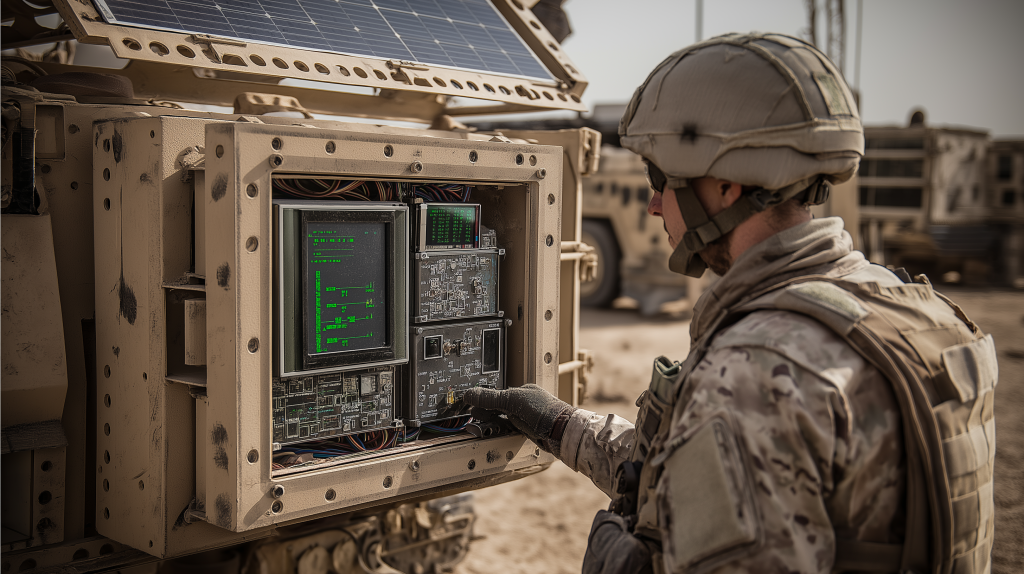
Flexible solar panel technologies enable integration of renewable energy generation directly into military equipment without compromising operational capabilities. Modern high-efficiency photovoltaic cells can be integrated into equipment covers, antenna arrays, and even display bezels to provide supplemental power generation.
Advanced power management systems automatically balance solar generation, battery storage, and load requirements to optimize energy utilization throughout mission cycles. These systems can extend operational endurance significantly while reducing dependence on external power sources.

Power-Aware System Architecture
Energy-efficient HMI design extends beyond individual components to encompass entire system architectures. Power-aware software automatically adjusts system behavior based on available energy reserves, gradually reducing non-essential functions as battery levels decline while maintaining critical capabilities.
Intelligent sleep and wake algorithms ensure that system components consume power only when actively required. Advanced sensors can detect user presence and attention, automatically adjusting system power states to match operational requirements.

Lifecycle Environmental Impact
Sustainable design considerations extend throughout the entire system lifecycle, from material selection through end-of-life disposal. Advanced materials science enables the development of ruggedized components using recyclable materials without compromising performance or durability.
Modular system architectures enable component-level upgrades and repairs, extending overall system lifecycles while reducing waste generation. Standardized interfaces ensure that upgraded components can integrate seamlessly with existing systems, protecting previous investments while incorporating new capabilities.

Thermal Management Efficiency
Efficient thermal management systems reduce cooling power requirements while maintaining optimal component temperatures. Advanced heat sink designs, thermal interface materials, and intelligent fan control systems minimize cooling power consumption while ensuring reliable operation in extreme environments.
Predictive thermal management algorithms anticipate temperature changes based on operational patterns and environmental conditions, preemptively adjusting cooling systems to maintain optimal efficiency.

Mission Endurance Optimization
Power-efficient HMI systems enable extended mission durations without resupply requirements, providing significant tactical advantages in contested environments. Reduced power consumption translates directly to increased operational range and mission flexibility. Intelligent power management systems provide operators with real-time feedback on energy consumption and projected mission endurance, enabling informed decisions about system utilization and mission planning.

The Aeromaoz Sustainability Advantage

Aeromaoz‘s specialized focus on military applications enables us to implement sustainability measures that enhance rather than compromise operational effectiveness. Our deep understanding of military power requirements allows us to optimize energy efficiency without sacrificing the performance and reliability that mission success demands.
Our agile development processes enable rapid incorporation of emerging sustainable technologies while maintaining rigorous military qualification standards. This specialized expertise provides significant advantages in delivering environmentally responsible solutions that meet evolving DoD requirements.
Sustainable defense technology represents both an environmental imperative and an operational advantage. Energy-efficient HMI systems enhance mission capabilities while supporting broader sustainability goals, creating win-win solutions for military effectiveness and environmental stewardship.

WORTH READING /

Edge Computing at the Tactical Edge: Reducing Latency in Combat HMI Systems

Modern military operations demand split-second decision-making capabilities that traditional centralized computing architectures simply cannot support. As sensor data volumes explode and mission complexity increases, edge computing is emerging as a critical enabler for next-generation human-machine interfaces that operate at the speed of combat.

The Latency Challenge
In combat scenarios, milliseconds matter. Traditional HMI systems that rely on centralized processing and cloud connectivity introduce latencies that can prove fatal in fast-moving tactical situations. Network congestion, satellite communication delays, and processing queues can add seconds to critical decision loops—an eternity in modern warfare.
Consider an unmanned aerial vehicle (UAV) operator managing multiple assets simultaneously. Each control input must translate to aircraft response with minimal delay, while sensor data from multiple platforms must be processed and displayed in real-time. Centralized processing architectures struggle to meet these demanding latency requirements, especially in contested electromagnetic environments where communication links may be degraded or intermittent.

Processing Power Where It’s Needed
Edge computing fundamentally changes this equation by bringing processing capabilities directly to the point of data collection and human interaction. Instead of transmitting raw sensor data to distant servers for processing, edge-enabled HMI systems perform critical computations locally, dramatically reducing response times and improving operational effectiveness. Modern edge computing nodes integrate powerful processors, specialized AI accelerators, and high-speed memory systems in ruggedized packages designed for forward deployment. These systems can process multiple sensor streams simultaneously while maintaining the environmental resilience required for military operations.

Real-Time Sensor Fusion
Edge computing enables sophisticated sensor fusion capabilities that would be impossible with centralized architectures. Multiple sensor inputs—radar, electro-optical, infrared, and electronic warfare systems—can be combined and processed locally to create comprehensive tactical pictures with minimal latency.
Advanced algorithms running on edge processors can detect, classify, and track multiple targets simultaneously while presenting filtered, prioritized information to operators through intelligent HMI systems. This local processing capability ensures continued operation even when communication links to higher-level command systems are compromised.

Autonomous Decision Support
Edge-enabled HMI systems can implement autonomous decision support algorithms that assist operators without requiring external connectivity. Machine learning models running on edge processors analyze tactical situations and provide recommendations based on local sensor data and pre-programmed mission parameters.
These capabilities prove particularly valuable in communications-denied environments where traditional command and control systems may be unavailable. Operators can continue to receive intelligent decision support and maintain situational awareness even when operating in complete isolation from higher-level networks.

Bandwidth Optimization
By processing data locally, edge computing systems dramatically reduce bandwidth requirements for tactical communications. Instead of transmitting raw sensor data, edge nodes can send processed intelligence summaries, reducing communication loads by orders of magnitude.
This bandwidth efficiency becomes critical in contested environments where communication capacity is limited and must be shared among multiple operational requirements. Edge processing ensures that available bandwidth is used for high-value information rather than raw data transmission.

Distributed Resilience
Edge computing architectures inherently provide greater system resilience through distributed processing capabilities. If individual edge nodes are compromised or destroyed, remaining nodes can continue to operate independently, maintaining critical capabilities even under adverse conditions.
This distributed approach contrasts sharply with centralized architectures where single points of failure can disable entire operational capabilities. Edge-enabled HMI systems maintain graceful degradation characteristics, continuing to provide essential functionality even when portions of the system are unavailable.

Power Efficiency Advantages
Local processing eliminates the power requirements associated with high-bandwidth data transmission, extending operational endurance for battery-powered systems. Edge processors optimized for specific military applications can deliver exceptional performance per watt, enabling extended mission durations without compromising processing capabilities. Advanced power management algorithms automatically adjust processing loads based on mission requirements and available power, ensuring optimal performance throughout mission execution.

The Aeromaoz Edge Advantage

Aeromaoz‘s expertise in ruggedized computing systems positions us uniquely to deliver edge computing solutions that meet demanding military requirements. Our specialized knowledge of both advanced processing architectures and environmental hardening enables us to create edge-enabled HMI systems that maintain peak performance in the harshest operational environments.
Our agile development approach allows rapid integration of emerging edge computing technologies while maintaining the reliability and security standards that military applications demand. This combination of technical expertise and military focus enables us to deliver edge computing solutions that larger, less specialized competitors struggle to match.
The tactical edge represents the future of military computing, where processing power moves to the point of greatest operational need. Organizations that embrace edge computing capabilities today will maintain decisive advantages in tomorrow’s fast-paced, contested environments.

WORTH READING /

Cybersecurity in Ruggedized HMI: Protecting Mission-Critical Interfaces from Advanced Threats

In an era where cyber warfare capabilities rival traditional kinetic threats, securing military human-machine interfaces has become a critical national security imperative. Modern HMI systems represent high-value targets for adversaries seeking to disrupt military operations, steal classified information, or inject false data into command-and-control systems.

Understanding the Threat Landscape
Today’s military HMI systems face sophisticated attack vectors that go far beyond traditional malware. State-sponsored actors deploy advanced persistent threats (APTs) specifically designed to infiltrate defense networks and remain undetected for extended periods. These threats target vulnerabilities in display protocols, input systems, and network communications that connect HMI devices to broader military networks.
Supply chain attacks represent another critical vulnerability. Adversaries may compromise hardware or software components during manufacturing, creating backdoors that activate only under specific conditions. The distributed nature of modern electronics supply chains makes detection of these threats particularly challenging.

Secure Architecture from the Ground Up
Effective HMI cybersecurity begins with secure boot processes that verify system integrity from the moment power is applied. Cryptographic signatures validate every component of the boot sequence, ensuring that only authorized code executes on the system. This creates a trusted foundation that prevents malicious code injection at the firmware level.
Hardware security modules (HSMs) provide tamper-resistant storage for encryption keys and security credentials. These specialized processors ensure that cryptographic operations occur in protected environments that resist both physical and electronic attacks.

Encrypted Display Protocols
Traditional display interfaces often transmit data in unencrypted formats, creating opportunities for adversaries to intercept sensitive information or inject false data. Modern secure HMI systems implement end-to-end encryption for all display communications, ensuring that classified information remains protected even if network traffic is compromised. Advanced implementations use dynamic encryption keys that change regularly, making long-term interception and decryption extremely difficult. Multi-layer encryption protocols provide defense in depth, ensuring that even if one encryption layer is compromised, additional protections remain in place.

Air-Gapped System Architectures
For the most sensitive applications, air-gapped architectures provide the ultimate protection against network-based attacks. These systems operate in complete isolation from external networks, communicating only through secure, one-way data diodes when information transfer is required. Modern air-gapped HMI systems maintain full functionality while eliminating network attack vectors. Secure media transfer protocols allow for controlled information updates while maintaining isolation from potentially compromised external systems.

Zero Trust Implementation
Zero trust security models assume that no system component is inherently trustworthy, requiring continuous verification of all system interactions. HMI systems implementing zero trust architectures authenticate and authorize every data request, even from internal system components. This approach extends to user interactions as well. Continuous authentication verifies operator identity throughout mission execution, detecting potential insider threats or compromised credentials in real-time.

Resilient System Design
Beyond preventing attacks, modern secure HMI systems are designed to maintain mission-critical functionality even when under active cyber assault. Redundant processing paths ensure continued operation if primary systems are compromised. Automated threat response capabilities can isolate affected components while maintaining overall system functionality. Real-time threat detection algorithms monitor system behavior for indicators of compromise, automatically implementing defensive measures when anomalies are detected. These systems can differentiate between legitimate operational variations and potential security threats, minimizing false positives that could disrupt mission operations.

The Aeromaoz Security Advantage

Aeromaoz‘s specialized focus on military HMI systems enables us to implement security measures that are specifically tailored to defense operational requirements. Our deep understanding of both cybersecurity threats and military operational needs allows us to design protection mechanisms that enhance security without compromising mission effectiveness. Our agile development processes enable rapid response to emerging threats, implementing security updates and patches with the speed that military operations demand. This specialized expertise and rapid response capability provide significant advantages over larger, less focused competitors who must balance diverse market requirements.
As cyber threats continue to evolve, the protection of mission-critical interfaces becomes increasingly vital to operational success. Investment in robust cybersecurity capabilities today ensures mission readiness and operational security in tomorrow’s contested environments.

WORTH READING /

AI-Enhanced HMI: How Machine Learning is Revolutionizing Military Interface Design

The battlefield of tomorrow demands interfaces that think, adapt, and evolve alongside their operators. As military operations become increasingly complex and time-sensitive, traditional static human-machine interfaces (HMIs) are giving way to intelligent systems powered by artificial intelligence and machine learning.

Predictive Intelligence at Your Fingertips
Modern AI-enhanced HMIs go beyond simple data display—they anticipate operator needs before they’re expressed. Through continuous analysis of mission parameters, environmental conditions, and operator behavior patterns, these systems can preposition critical information, highlight emerging threats, and streamline decision-making processes.
Consider a combat pilot approaching a high-threat area. An AI-enhanced cockpit display doesn’t just show current radar contacts—it predicts likely threat vectors based on terrain, weather, and historical engagement patterns. The interface automatically adjusts display priorities, bringing mission-critical data to the foreground while reducing visual clutter from less relevant information.

Adaptive Interfaces for Dynamic Missions
Machine learning algorithms enable HMI systems to adapt in real-time to changing mission requirements. Display brightness, contrast, and color schemes automatically adjust based on ambient lighting conditions and mission phases. During night operations, the system seamlessly transitions to optimized low-light configurations without manual intervention.
These adaptive capabilities extend to information prioritization as well. AI algorithms learn from operator interactions, identifying which data sources are most valuable for specific mission types and operational contexts. Over time, the interface becomes increasingly tailored to individual operator preferences and mission-specific requirements.

Intelligent Maintenance and System Health
AI-powered predictive maintenance represents a paradigm shift from reactive to proactive system management. By continuously monitoring component performance, environmental stressors, and usage patterns, AI algorithms can predict potential failures before they occur.
Smart HMI systems provide maintenance crews with precise diagnostic information, reducing troubleshooting time and improving system availability. Visual indicators show not just current system status, but predicted maintenance windows and component lifecycle projections.

Learning from Mission Data
Every mission generates valuable data that can improve future operations. AI-enhanced HMIs capture operator interactions, decision patterns, and performance metrics to continuously refine their algorithms. This creates a feedback loop where each mission improves system performance for subsequent operations.
Machine learning models analyze successful mission outcomes to identify optimal interface configurations and information presentation strategies. These insights inform automatic system adjustments and provide valuable input for future HMI design iterations.

The Aeromaoz Advantage

At Aeromaoz, we’re pioneering the integration of AI capabilities into ruggedized military interfaces without compromising the reliability and durability that mission-critical systems demand. Our specialized expertise in both advanced computing architectures and military-grade hardware enables us to deliver AI-enhanced solutions that larger competitors struggle to match in terms of customization and rapid deployment.
Our agile development approach allows us to quickly incorporate emerging AI technologies while maintaining the security and reliability standards essential for defense applications. This combination of innovation and specialization positions us uniquely to support the evolving needs of modern military operations.
The future of military HMI lies in intelligent systems that enhance human capabilities rather than replace human judgment. As AI technology continues to evolve, the operators who leverage these advanced interfaces will maintain decisive advantages in increasingly complex operational environments.

WORTH READING /

Rapid Prototyping and Customization in HMI for Defense Platforms

In today’s accelerated defense acquisition environment, traditional development timelines spanning years are becoming strategic liabilities. System integrators and platform manufacturers face mounting pressure to deliver advanced capabilities faster while maintaining the reliability and performance standards demanded by mission-critical applications. The solution lies in rapid prototyping methodologies and customization approaches that can compress development cycles from months to weeks without sacrificing quality or functionality.

The Imperative for Speed in Defense HMI Development
Modern defense programs operate under unprecedented time constraints driven by evolving threats and technological competition. When Boeing or Lockheed Martin faces compressed schedules for new aircraft cockpit systems, or when Rheinmetall AG needs enhanced armored vehicle interfaces based on operational feedback, traditional HMI development approaches become program bottlenecks.

Procurement managers at companies like Thales and BAE Systems recognize that suppliers capable of rapid prototyping provide strategic advantages beyond schedule compression. Specialized HMI providers like Aeromaoz, with their focused engineering capabilities and streamlined decision-making processes, can quickly evaluate design concepts, incorporate user feedback early, and adapt to changing requirements without the bureaucratic delays common in larger organizations.

Modular Hardware Architectures: Building Blocks for Rapid Customization
Modular hardware design leverages standardized hardware building blocks that can be quickly assembled into customized solutions while maintaining reliability and performance for military and aerospace applications. Specialized suppliers like Aeromaoz have developed modular platforms where display modules, processing units, interface controllers, and power management systems function as interchangeable components, enabling system integrators to configure solutions rapidly without complete custom development.

This approach proves valuable for UAV applications where different missions require different display configurations, or naval systems where various vessel types demand different interface specifications. Aeromaoz’s modular architecture allows the same hardware platform to support applications ranging from helicopter cockpit displays to armored vehicle commander stations through configuration changes rather than complete redesign. Scalable processing architectures accommodate varying computational requirements across applications. Basic configurations support simple display functions for flight simulator applications, while enhanced configurations provide processing power for complex augmented reality overlays in advanced fighter aircraft systems.

Software Modularity: Accelerating Interface Development
Modular software architectures enable rapid customization of user interfaces, data processing functions, and communication protocols. Aeromaoz has developed comprehensive graphics libraries optimized for military applications that provide pre-developed components for tactical displays, sensor data visualization, and system status indicators, incorporating human factors engineering principles and military design standards. The company’s protocol abstraction layers enable software modules to communicate with different hardware systems and external interfaces. This allows Aeromaoz’s HMI systems to be quickly adapted for integration with various avionics systems, vehicle networks, or command and control systems without fundamental software modifications, a capability that has proven essential for system integrators working with diverse platform architectures.

Configuration management tools enable rapid generation of application-specific software builds from modular components. Design engineers can specify required functionality through configuration files rather than custom programming, dramatically reducing development time while maintaining software quality.

Collaborative Development with System Integrators
Rapid prototyping success depends on close collaboration between specialized HMI suppliers and system integrators throughout development. Aeromaoz’s collaborative development approach replaces traditional lengthy requirement phases with iterative processes involving continuous customer feedback and rapid design iterations.
Co-location of engineering teams during critical phases enables real-time problem solving. When L3 Harris or Leonardo DRS integrates HMI solutions with complex architectures, Aeromaoz’s practice of having supplier engineers work directly with integrator teams eliminates communication delays and ensures immediate technical issue resolution.
Aeromaoz conducts rapid prototyping workshops that bring together HMI designers, system engineers, and end users to evaluate concepts quickly and identify optimization opportunities. These sessions compress traditional requirement definition phases from months to weeks while improving final product quality through early user involvement.
The company has developed specialized collaborative processes that enable system integrators to participate directly in HMI design and validation activities, ensuring delivered solutions meet both technical specifications and operational requirements efficiently.

Digital Twins and Simulation: Virtual Development and Validation
Digital twin technology revolutionizes HMI development by enabling comprehensive testing and validation in virtual environments before physical prototypes are constructed. Aeromaoz leverages this technology to dramatically reduce development time while improving design quality through extensive simulation-based optimization.
Aeromaoz’s virtual cockpit environments allow pilot interfaces to be evaluated using flight simulators and virtual reality systems. The company’s human factors engineering capabilities can validate designs through simulated operational scenarios that would be dangerous or expensive to recreate with physical prototypes, particularly valuable for military aircraft applications.

Physics-based simulation capabilities enable Aeromaoz to validate HMI performance under extreme operational conditions without expensive testing facilities. Temperature effects, vibration impacts, and electromagnetic interference can be modeled accurately, allowing design optimization before physical testing begins.
Aeromaoz’s virtual integration testing allows HMI systems to be tested with simulated avionics systems, vehicle networks, and mission systems before actual hardware integration. This identifies interface issues and compatibility problems early, preventing costly discoveries during system integration phases.

Advanced Manufacturing and Future Technologies
Advanced manufacturing technologies enable Aeromaoz to construct physical prototypes in timeframes supporting iterative development. The company’s 3D printing capabilities for mechanical components, rapid PCB fabrication, and automated assembly processes produce functional prototypes within days rather than weeks.
Aeromaoz’s additive manufacturing capabilities prove valuable for complex mechanical components requiring expensive tooling for traditional manufacturing. Enclosure designs, mounting systems, and thermal management components can be rapidly produced and tested, enabling multiple design iterations within compressed schedules.
Aeromaoz is also investing in artificial intelligence applications for HMI design, promising further acceleration through automated optimization, predictive modeling, and intelligent design assistance. The company’s machine learning algorithms can analyze operational data to identify interface improvements and predict user behavior patterns.
Cloud-based development platforms enable Aeromaoz’s distributed engineering teams to collaborate effectively with system integrators while leveraging scalable computational resources for simulation and analysis activities, supporting the collaborative development approaches essential for rapid prototyping success.

Conclusion

Rapid prototyping and customization capabilities have become strategic imperatives for HMI suppliers serving defense and aerospace markets. The combination of modular hardware architectures, software componentization, collaborative development processes, and digital twin validation enables development cycle compression while maintaining quality and reliability standards required for mission-critical applications. As operational requirements evolve and program schedules become more aggressive, these capabilities will increasingly determine competitive success in defense HMI markets.

WORTH READING /

Aeromaoz Selected for Critical FLRAA Project Display Bezels – News Announcement

We are excited to announce that Aeromaoz has been chosen to develop and manufacture five different bezels for the US Airforce’s Future Long-Range Assault Aircraft program set to transform military aviation by 2030! This prestigious selection validates our position as a leading provider of mission-critical human-machine interface solutions.

Ilan Wilf, Aeromaoz’s VP Sales & Marketing, expressed his pride in this achievement, highlighting how our engineering excellence secured this important contract. “This selection demonstrates the confidence our partners have in Aeromaoz’s ability to deliver rugged, reliable HMI solutions that perform flawlessly in the most demanding environments,” said Wilf.

Aeromaoz’s development will be seamlessly integrated into the displays and control systems of the aircraft, working alongside prime contractors Bell Textron and other contractors. Our selection was based on several key advantages that set us apart in the aerospace industry:
Multidisciplinary Engineering Excellence: Our integrated approach combining mechanical and electrical, thermal, and software engineering ensures optimal tacticle functionality under extreme conditions
End-to-End Development Process: From comprehensive requirements analysis through environmental testing to production-ready systems
Proven Environmental Durability: Our designs withstand temperature ranges from -40°C to +85°C, extreme vibrations, and electromagnetic interference
Operator-Centric Design Philosophy: Creating interfaces that enhance rather than hinder human performance under stress
Advanced Manufacturing Capabilities: In-house precision manufacturing with rigorous quality control ensuring consistent reliability

The bezels will undergo our comprehensive environmental testing protocols, including temperature cycling, vibration testing, humidity exposure, salt spray testing, and electromagnetic compatibility verification. This ensures mission-ready performance in the harsh operational environments typical of military aviation applications.

This contract reinforces Aeromaoz’s commitment to supporting the next generation of military aviation technology and our role in ensuring mission success through reliable human-machine interfaces.

WORTH READING /

User-Centric HMI – Enhancing Operator Performance and Safety

In today’s complex mission-critical environments, the difference between mission success and failure often comes down to how effectively operators can interact with their systems. Whether in the cockpit of a fighter jet, the command center of an armored vehicle, or the control station of an unmanned aerial vehicle, human-machine interface (HMI) design has become a decisive factor in operational effectiveness and safety outcomes.

The Critical Role of Human Factors Engineering in Military and Aviation Systems
Human factors engineering represents the scientific discipline of understanding human capabilities, limitations, and behaviors to optimize system design. In avionics and land system HMI applications, this approach goes beyond traditional interface design to create systems that work seamlessly with human cognitive processes under extreme stress conditions.
Modern military operations demand split-second decision-making in environments characterized by high cognitive load, time pressure, and potentially life-threatening consequences. Traditional interface designs that work adequately in commercial applications often fail catastrophically when operators face combat stress, G-forces, or tactical time constraints. This is where user-centric HMI design becomes essential.

The foundation of effective human factors engineering in defense applications lies in understanding the operator’s mental model, workload distribution, and stress responses. Research conducted by defense organizations worldwide consistently demonstrates that interfaces designed with human cognitive architecture in mind reduce operator error rates by up to 40% while simultaneously improving task completion speed and accuracy.

Intuitive Layouts: The Science of Cognitive Efficiency
Intuitive interface layouts in mission-critical systems must balance information density with cognitive accessibility. Unlike consumer electronics, where users have time to learn complex interfaces, military and aviation systems require immediate usability by operators who may be encountering the system for the first time or operating under extreme duress.
The principle of spatial consistency plays a crucial role in avionic displays and rugged HMI solutions. Research shows that when critical functions maintain consistent positioning across different system modes, operators develop muscle memory that remains functional even when visual attention is compromised by external threats or environmental conditions.
Information hierarchy becomes particularly critical in flight simulators and actual combat scenarios. Primary flight data, weapon systems status, and threat warnings must be presented in a visual hierarchy that matches the operator’s decision-making priorities. This requires deep understanding of operational workflows and the cognitive processes involved in high-stress decision-making.

Color coding, typography, and iconography in military HMI systems must account for varying lighting conditions, from the darkness of night operations to the harsh glare of desert environments. The most effective designs employ redundant information encoding, ensuring that critical data remains accessible whether operators rely on color, shape, brightness, or position cues.

Tactile Feedback: Bridging the Physical-Digital Divide
Tactile feedback technology has emerged as a game-changing element in modern HMI design, particularly for applications where visual attention must remain focused on external threats or navigation challenges. In armored vehicle systems and naval solutions, operators often need to adjust controls without looking away from their primary visual tasks.
Advanced haptic feedback systems can communicate system status, confirm command inputs, and even provide directional guidance through touch sensations. For helicopter pilots operating in brownout conditions or tank commanders navigating urban environments, tactile cues can provide critical information when visual and auditory channels are overloaded or compromised.

The implementation of force feedback in control systems allows operators to feel the resistance and response characteristics of the systems they’re controlling. This is particularly valuable in UAV operations, where remote pilots lose the natural physical feedback they would experience in manned aircraft. Well-designed haptic systems can restore some of this lost sensory information, improving control precision and reducing pilot fatigue.

Error Minimization Through Intelligent Design
Error prevention in mission-critical HMI design requires a multi-layered approach that anticipates human behavior under stress. The most effective systems employ confirmatory interactions for irreversible actions, mode awareness indicators to prevent mode confusion, and intelligent defaults that reduce the cognitive burden on operators.
Situational awareness preservation becomes paramount when designing interfaces for complex military systems. The challenge lies in providing comprehensive information without creating information overload. Modern approaches utilize adaptive interfaces that prioritize information based on mission phase, threat level, and operator workload.
Smart error recovery mechanisms allow systems to gracefully handle operator mistakes without catastrophic consequences. This includes features like command buffering, undo functionality, and automatic system state recovery that help maintain operational continuity even when human errors occur.

Augmented Reality and Advanced Haptics: The Future of Situational Awareness
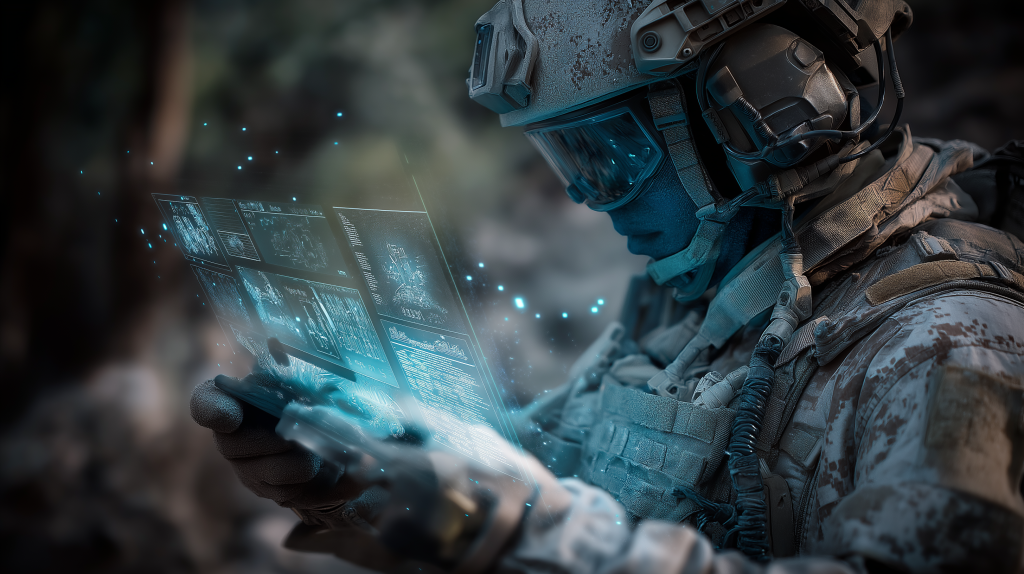
Augmented reality (AR) technology is revolutionizing cockpit situational awareness and battlefield information systems. By overlaying digital information onto the operator’s natural field of view, AR systems reduce the cognitive overhead associated with information correlation and spatial translation.

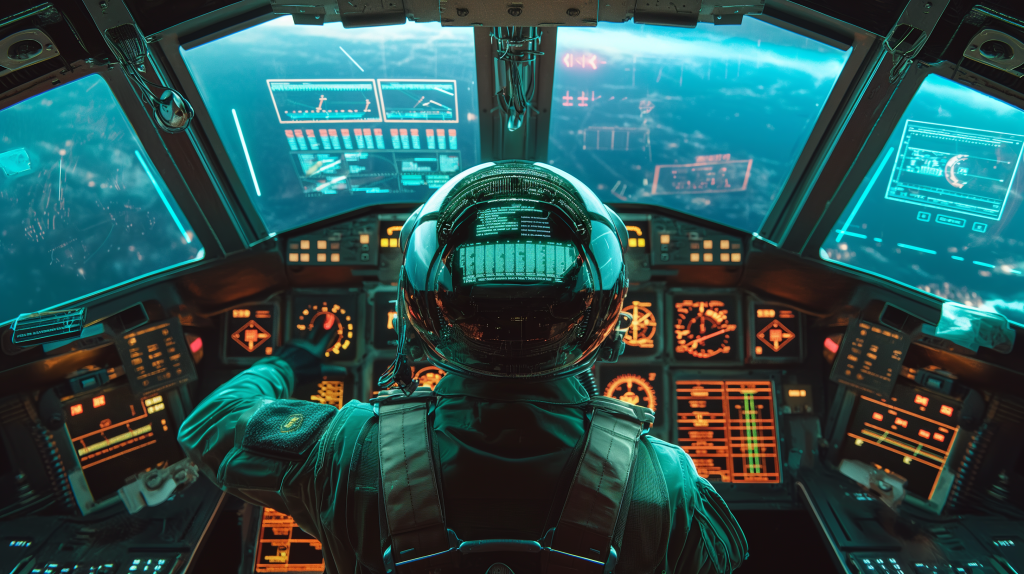
In aviation applications, AR can project flight path information, threat locations, and navigation data directly onto helmet-mounted displays or heads-up displays, allowing pilots to maintain visual contact with the external environment while accessing critical system information. For ground vehicle operators, AR can highlight potential threats, display route information, and provide real-time intelligence updates without requiring attention shifts to traditional displays.
Advanced haptic technology extends beyond simple vibration alerts to include 3D tactile sensations, thermal feedback, and ultrasonic haptics that create touch sensations in mid-air. These technologies enable operators to feel virtual objects, sense spatial relationships, and receive complex information through touch, even while wearing protective equipment.
Companies like Aeromaoz are pioneering the integration of these advanced technologies into rugged HMI solutions specifically designed for the harsh environments and demanding requirements of military and commercial aviation applications.

Conclusion

The evolution toward user-centric HMI design represents more than a technological advancement—it’s a fundamental shift toward recognizing human factors as a critical component of system performance. As military and aviation systems become increasingly complex, the interfaces that connect humans to these systems must become more intuitive, more responsive, and more aligned with human cognitive capabilities.
The future of mission-critical operations depends on our ability to create seamless human-machine partnerships where technology amplifies human capabilities rather than overwhelming them. Through careful application of human factors engineering, tactile feedback, and emerging technologies like augmented reality, we can build systems that not only meet the technical requirements of modern operations but also optimize the human element that remains central to mission success.