
Designing for the Extremes: Thermal Management in -40°C to +85°C Environments
Military and commercial aviation platforms operate in hostile environments-from frozen Arctic tundra at -40°C to scorching Middle Eastern deserts exceeding +85°C. Between these extremes lies a spectrum of environmental challenges: violent vibrations, corrosive salt spray in naval environments, electromagnetic interference, and extreme pressure differentials at altitude. For avionics manufacturers and system integrators, success depends on designing for the extremes.
The Temperature Challenge: Beyond Simple Heating and Cooling
Thermal management extends beyond single temperature specifications. Electronic components experience stress from absolute extremes, thermal cycling during flight transitions, and thermal gradients within enclosures. At -40°C, displays lose contrast, solder joints become brittle, lubricants solidify, and polymers lose flexibility. Battery performance degrades, capacitance shifts, and mechanical tolerances tighten. Yet systems must achieve full capability within minutes of power-up. At +85°C operational temperature, semiconductor junctions approach maximum ratings, capacitors age rapidly, and materials outgas compounds that fog optics or corrode contacts. Thermal management becomes critical for long-term reliability.
Modern thermal design employs heat sinking, conformal coating, thermal interface materials, heat pipes, or thermoelectric cooling. Most challenging is managing thermal shock-rapid transitions creating mechanical stress through differential expansion. Material selection requires compatible coefficients of thermal expansion (CTE) across dissimilar material interfaces.
DO-160: The Environmental Testing Standard
RTCA DO-160, “Environmental Conditions and Test Procedures for Airborne Equipment,” provides aviation’s definitive environmental qualification framework. Now in revision G, this standard establishes test categories spanning environmental stressors aircraft equipment encounters.
Section 4: Temperature and Altitude testing spans multiple categories. Category A1 covers -15°C to +40°C for standard installations, while Category B extends to -40°C to +55°C. Category A3 reaches +85°C operational temperature, and Category A5 tests from -55°C to +95°C for extreme installations.
Section 8: Vibration proves particularly demanding. Standard Vibration Tests (Category S) subject equipment to swept sine and random vibration representing normal aircraft operation. Robust Vibration Tests (Categories R, U, U2) simulate helicopter installations and prolonged exposure, including endurance testing stressing functional performance and structural integrity.
Sections 15-21 cover Electromagnetic Interference (EMI) and Electromagnetic Compatibility (EMC), verifying equipment neither generates interfering emissions nor succumbs to external electromagnetic fields. Testing includes conducted and radiated emissions, voltage spike susceptibility, and audio frequency conducted susceptibility.
Section 14: Salt Spray addresses naval aviation where salt-laden air corrodes structures and degrades coatings. Section 12: Sand and Dust proves critical for desert operations where particulate infiltration abrades parts, bridges contacts, and clogs thermal ventilation.
Material Science: The Foundation of Harsh Environment Design
Aluminum alloys remain the workhorse for ruggedized enclosures, offering thermal conductivity, low weight, and EMI shielding. 6061-T6 provides good strength and corrosion resistance, while 7075-T6 offers superior strength. Surface treatments-hard anodizing, chromate conversion coating-protect against corrosion.
Conformal coatings have evolved beyond moisture barriers. Modern parylene coatings provide pinhole-free protection while maintaining thermal performance. Advanced ceramics and composite materials address applications where traditional materials fail. Aluminum nitride substrates provide thermal conductivity with electrical insulation. Polyimide flexible circuits maintain reliability across extreme temperatures.
Solder technology transformed with lead-free mandates. While tin-silver-copper (SAC) alloys satisfy regulations, their brittleness and tin whisker growth create harsh environment challenges. High-reliability designs employ gold wire bonds or specialized solders for improved low-temperature performance.
Optical materials face unique challenges. Standard acrylic and polycarbonate become brittle at low temperatures. Glass remains stable but requires careful mounting. Sapphire offers ultimate hardness and temperature stability for critical elements.
Application-Specific Challenges
Naval platforms face relentless corrosion from salt spray, humidity, and temperature cycling. Designs emphasize sealed connectors with gold-plated contacts, stainless steel hardware, and multiple protective coating layers. Many naval designs employ sealed enclosures with internal pressure equalization.
Desert operations combine extreme heat, thermal cycling, and abrasive dust. Equipment exposed to direct sunlight may experience surface temperatures exceeding +100°C. Radiative heating drives reflective finishes, thermal barriers, and sometimes active cooling. Sand filtration proves critical, requiring accessible filter elements.
High-altitude operations create pressure differentials stressing sealed enclosures and affecting thermal dissipation. Convective cooling effectiveness decreases with reduced air density, potentially halving heat transfer at 40,000 feet. Designs compensate through enlarged airflow paths, heat pipes, or conduction to aircraft structure.
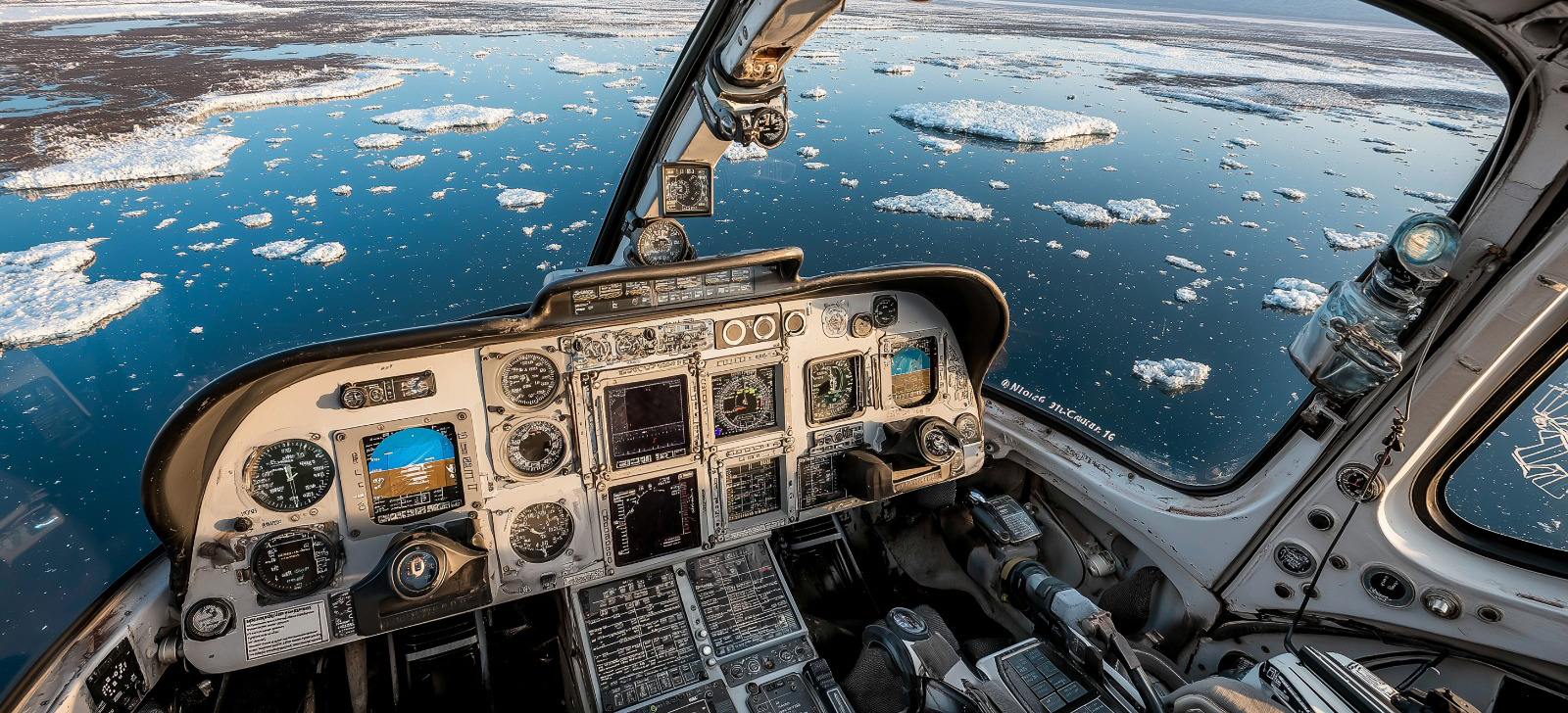
Arctic operations challenge materials, lubricants, and operators. Beyond low-temperature concerns, Arctic conditions create extreme differentials between heated cockpits and external mounting, ice accumulation affecting seals, and long periods at temperature extremes.
The Integration Challenge
Environmental qualification occurs within complete system integration context. A display qualified to +85°C may fail when installed in a console restricting airflow or positioned adjacent to heat-generating computers. Thermal modeling using computational fluid dynamics predicts temperature distributions, guiding vent placement, component layout, and thermal interface requirements.
Qualification testing proceeds hierarchically-components first, then assemblies, finally complete systems. This identifies problems early when correction costs remain reasonable, but demands careful attention to test conditions matching actual installations.
Conclusion
Designing for environmental extremes demands holistic understanding of thermal management, material science, environmental testing, and operational realities. The difference between systems that survive and those that excel lies in attention to details: thermal interface preparation, connector sealing, coating application, and mounting hardware selection.
With over 40 years delivering mission-critical rugged HMI solutions across military and commercial aviation, armored vehicles, UAVs, flight simulators, and naval platforms, Aeromaoz brings deep expertise in thermal management and environmental qualification. Our solutions operate reliably from frozen Arctic deployments to scorching desert operations, from sea-level naval operations to high-altitude flight, ensuring mission success across diverse and demanding environments.